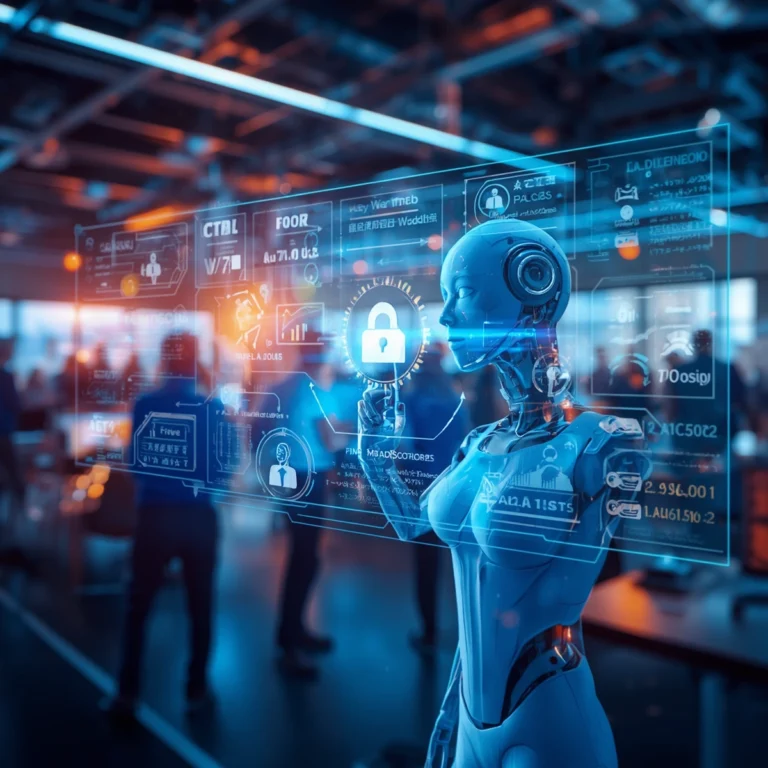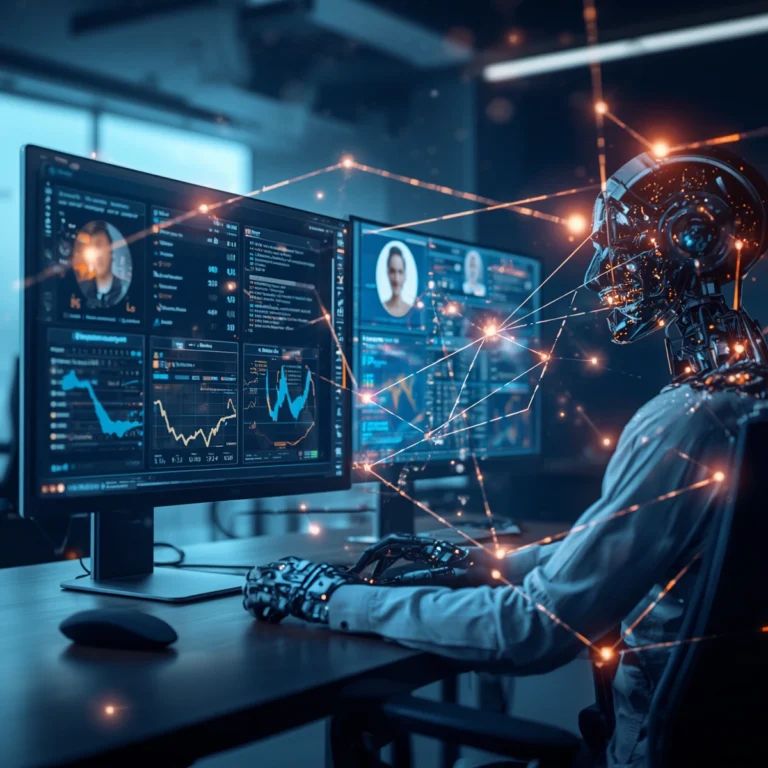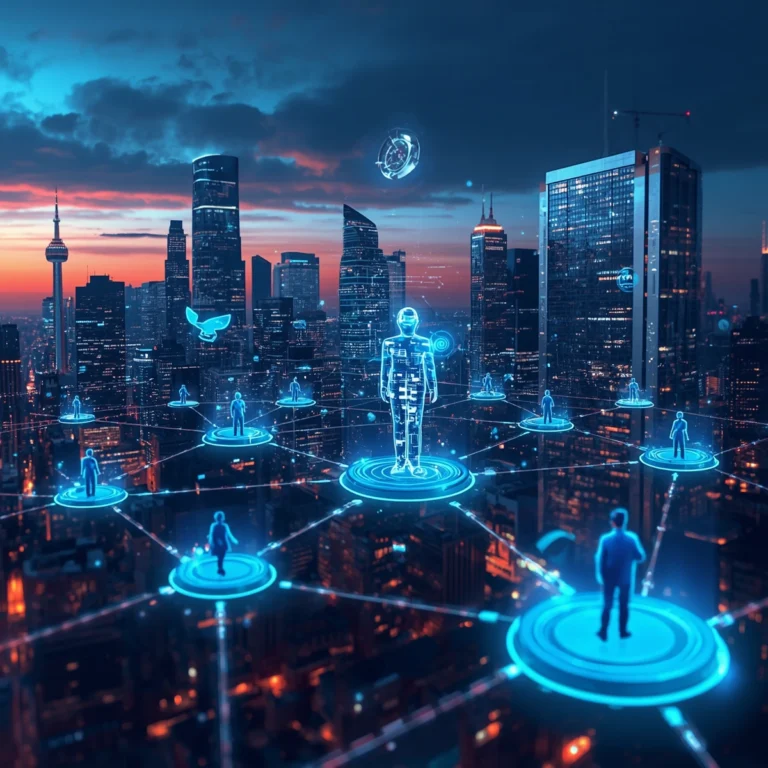

The role of the Chief Marketing Officer (CMO) has evolved dramatically over the past two decades. What was once a position primarily focused on brand awareness, advertising, and PR has now expanded to encompass customer experience, data analytics, digital transformation, and revenue growth. In the age of omnichannel engagement, real-time personalization, and AI-driven automation, the modern CMO stands at the nexus of creativity and data science.
But as artificial intelligence continues its rapid march into all aspects of marketing—from content generation and customer segmentation to predictive analytics and campaign optimization—a provocative question looms: Will AI agents eventually replace the CMO altogether?
In this post, we’ll explore this question from multiple angles. We’ll examine the current capabilities of AI in marketing, assess the essential responsibilities of a CMO, evaluate where AI excels (and where it falls short), and finally, forecast what the future might hold. The answer isn’t as simple as a binary yes or no, but the implications are profound for businesses, marketers, and executives alike.
The Rise of AI in Marketing
Artificial intelligence is already deeply embedded in the marketing ecosystem. What was once a futuristic concept is now a set of practical tools that businesses of all sizes use daily.
AI powers recommendation engines on e-commerce platforms, optimizes ad spend through real-time bidding algorithms, personalizes email content, and generates headlines, social media posts, and even entire blog articles. With tools like OpenAI’s GPT-4, Jasper, Persado, and Phrasee, marketers can create tailored messages for segmented audiences at scale.
Predictive analytics platforms analyze vast amounts of customer data to anticipate behavior, churn, and lifetime value. Chatbots, powered by natural language processing, engage customers 24/7, providing support and driving conversions. Image recognition tools help in trend analysis and social listening, while AI-driven sentiment analysis captures the emotional undertones of customer feedback across channels.
This means that many traditional marketing tasks—research, analysis, content creation, A/B testing, and reporting—are being accelerated or automated by AI agents. The CMO is no longer commanding an army of specialists to perform these tasks; increasingly, they’re managing algorithms, configuring platforms, and interpreting outputs.
So, if AI can already do much of what a marketing department does, the next logical question arises: Can it do what the CMO does?
Understanding the Role of the CMO
To answer that question, we need to clearly define what a CMO does. The responsibilities of a CMO can be grouped into several broad categories:
- Strategic Vision: Defining the brand’s positioning, long-term goals, and go-to-market strategies.
- Leadership and Team Management: Leading large cross-functional teams, hiring talent, and fostering a collaborative culture.
- Customer-Centric Innovation: Identifying customer needs, shaping experiences, and driving loyalty.
- Budget and ROI Accountability: Allocating marketing budgets, tracking performance metrics, and delivering measurable results.
- Cross-Functional Influence: Collaborating with product, sales, finance, and technology teams to align efforts.
- Crisis and Reputation Management: Navigating brand perception during sensitive or unpredictable events.
- Executive Communication: Representing marketing at the C-suite level and aligning with board-level objectives.
While AI can assist with many aspects of these functions, it is important to consider where human judgment, emotional intelligence, and contextual awareness remain irreplaceable, at least for now.
What AI Does Well in the Marketing Domain
AI shines in environments where data is abundant, patterns are detectable, and outputs can be continuously optimized. This is why AI has already outperformed humans in many narrow marketing tasks.
For instance, when it comes to media buying, programmatic advertising systems powered by AI can analyze millions of data points in real time to determine the best ad placement, bid amount, and creative variation. No human could do this as efficiently.
In content personalization, AI can dynamically adjust email subject lines, product recommendations, and landing pages based on a user’s behavior, demographics, and preferences—delivering hyper-relevant experiences at scale.
In analytics and forecasting, AI systems can not only report on past performance but also predict future trends, detect anomalies, and recommend optimal strategies. Platforms like Adobe Sensei, Salesforce Einstein, and Google’s Performance Max are already assisting marketers with such predictive capabilities.
And in customer engagement, conversational AI agents are handling millions of interactions across chat, email, and voice, resolving issues and influencing purchasing decisions with growing effectiveness.
The pace of innovation in generative AI, particularly large language models (LLMs), suggests that even more creative and strategic tasks—like drafting campaign briefs or composing compelling ad copy—can now be handled by AI with surprising fluency.
The Limits of AI: Where CMOs Still Reign Supreme
Despite these advancements, AI still lacks some key faculties that define the CMO role. Perhaps the most critical is strategic intuition—the ability to understand abstract market forces, cultural nuances, emerging technologies, and competitive dynamics, and synthesize them into a coherent long-term vision.
AI models are trained on historical data. They excel at pattern recognition but struggle with extrapolation, imagination, or navigating uncharted territory. A human CMO can recognize when the market is ripe for disruption, when customer sentiment is shifting subtly, or when a bold brand pivot is necessary, often before the data clearly says so.
Similarly, leadership and culture-building are deeply human endeavors. AI cannot motivate a team, resolve interpersonal conflict, or coach junior talent. Nor can it intuitively build trust with a board of directors or inspire a creative team to break the mold.
Ethical judgment is another realm where AI falters. Marketing decisions often intersect with sensitive social, political, or environmental issues. Knowing when to speak up, how to craft an authentic message, and how to navigate backlash requires empathy and contextual awareness that AI does not possess.
Even with explainable AI, the decision-making process of complex models can be opaque. A CMO is held accountable for every dollar spent and every message broadcast. Delegating too much power to algorithms without full understanding or oversight is not just risky—it’s negligent.
In other words, AI may be the CMO’s co-pilot, but it’s not ready to fly the plane solo.
Hybrid Leadership: The AI-Augmented CMO
Rather than viewing AI and CMOs as competitors, the more realistic—and compelling—vision is one of collaboration. The future belongs to AI-augmented CMOs: executives who harness AI tools not as replacements, but as force multipliers.
These next-generation CMOs will use AI to:
- Continuously monitor customer sentiment and adapt brand messaging in real time.
- Simulate market scenarios and test campaign strategies virtually before deploying them in the real world.
- Analyze first-party data to discover untapped segments or product opportunities.
- Orchestrate personalized customer journeys across platforms using AI-driven automation.
- Generate creative content that is then refined by human storytellers for tone, nuance, and emotional resonance.
Crucially, AI will free up time and mental bandwidth by handling repetitive tasks, allowing CMOs to focus on high-level thinking, creative direction, stakeholder alignment, and customer empathy.
This model of hybrid leadership is already visible. At global companies like Unilever, Mastercard, and Adobe, CMOs are deeply involved in AI initiatives—not to outsource their jobs but to elevate them. They are creating “marketing AI centers of excellence,” hiring AI specialists, and investing in proprietary algorithms that align with their unique brand DNA.
The CMO Skillset of the Future
To thrive in this AI-enhanced environment, CMOs must evolve. The CMO of the 2030s will be a unique hybrid of strategist, technologist, creative visionary, and data scientist.
They will need fluency in AI capabilities and limitations—not necessarily to code, but to ask the right questions, evaluate vendor claims, and make informed build-vs-buy decisions.
They’ll need to collaborate closely with chief data officers, IT teams, and product leaders to ensure seamless integration of marketing AI across the enterprise.
And perhaps most importantly, they’ll need to champion ethical AI practices—ensuring fairness, transparency, and inclusivity in all AI-driven customer interactions.
Leadership training for CMOs is already adapting to reflect these changes. Executive education programs now include modules on AI literacy, prompt engineering, and algorithmic bias. Marketing degrees are embedding data science and human-centered design into their curricula.
In essence, the CMO is not being replaced by AI, but reborn through it.
Will AI Ever Fully Replace the CMO?
The idea of a fully autonomous AI acting as a company’s CMO may seem far-fetched today, but let’s entertain the scenario.
In a hypothetical future where AGI (Artificial General Intelligence) becomes reality—capable of understanding context, emotion, abstract reasoning, and social cues—then, theoretically, yes, an AI agent could function as a CMO.
This AI would have perfect recall of brand history, complete data integration across all systems, and the ability to simulate and evaluate thousands of marketing strategies instantly. It might even craft campaign narratives more emotionally resonant than a human could, based on fine-tuned psychological models.
However, even in this scenario, serious questions remain. Would stakeholders trust an AI with the brand’s soul? Could it navigate the political and emotional complexity of human teams? Who would be accountable if something went wrong?
More likely, even in an AGI-dominated future, human CMOs would serve as orchestrators and guardians, working alongside AI not as supervisors of machines, but as stewards of meaning, purpose, and trust.
Conclusion: The Future Is Human + Machine
AI is already transforming the marketing landscape, and its trajectory suggests that its role will only grow more central. But the rise of AI agents does not spell the end of the CMO. Instead, it signals a renaissance in marketing leadership.
The CMO of the future will be a super-conductor of intelligence—harnessing AI for efficiency and insight while bringing uniquely human skills to the fore: empathy, ethics, creativity, and vision.
In this hybrid future, the question is not “Will AI replace the CMO?” but rather “How can the CMO evolve to embrace AI—and lead more effectively because of it?”
The answer lies not in fear, but in adaptation. The CMOs who survive—and thrive—will be those who welcome AI not as a threat, but as a partner in the journey of brand building, customer connection, and business growth.
DigitalsGalaxy helps B2B companies build reliable lead generation systems using cold email, LinkedIn outreach, AI voice agents, SMS follow-up, and CRM automation. We focus on the full outreach system — from infrastructure and targeting to messaging, follow-up, reporting, and optimization. Our goal is to help businesses create more qualified conversations and turn outbound into a scalable growth channel.