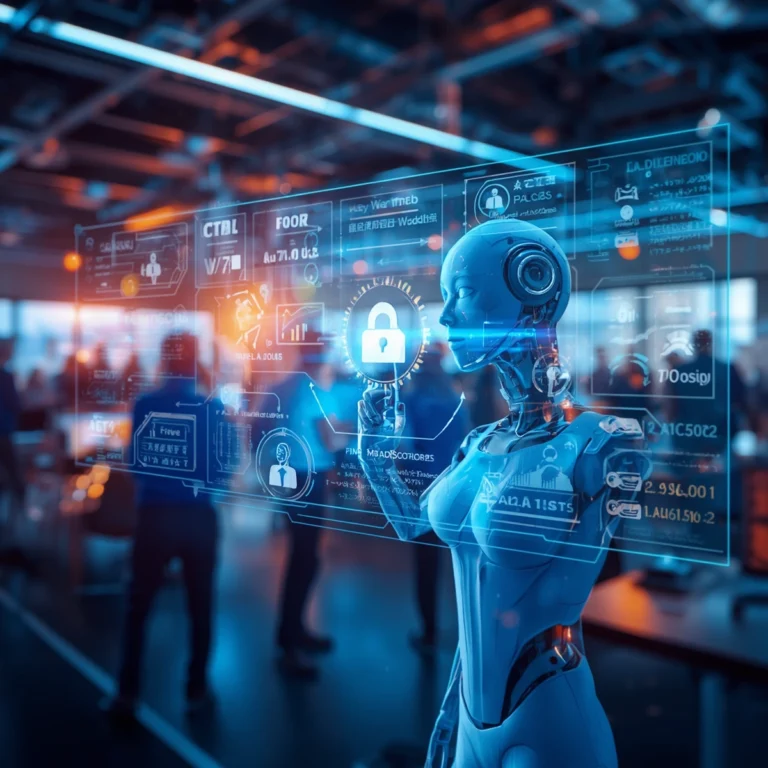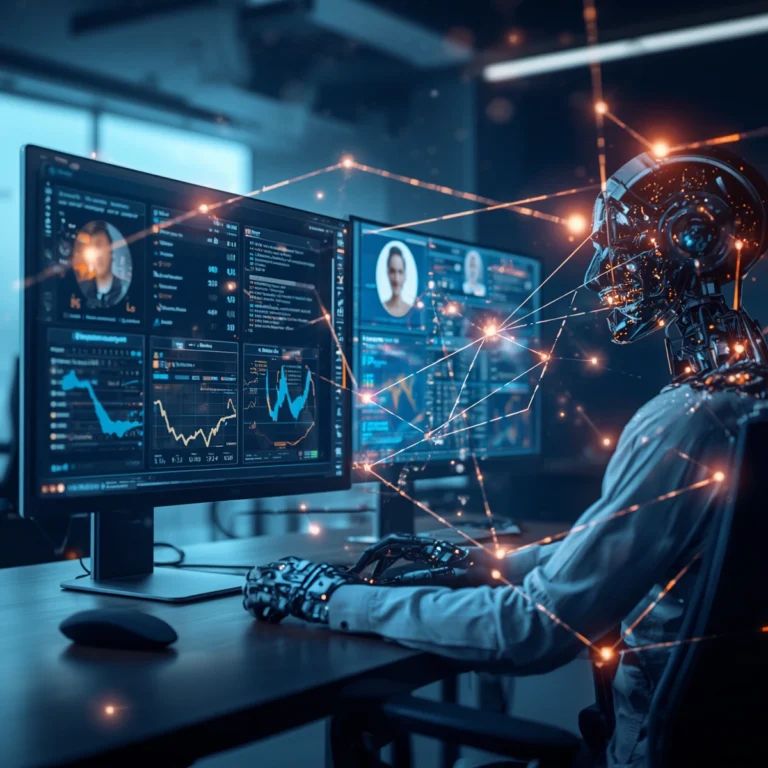

Social media has become a cornerstone of digital interaction, where people engage not only with friends and family but with brands, communities, and causes. For businesses, managing these interactions is no longer a secondary concern—it’s a strategic imperative. As the volume of social media activity continues to surge, companies are exploring technological solutions to keep up with customer engagement. At the center of this technological conversation are AI agents. Proponents argue that AI can take over community management tasks entirely, while skeptics warn that AI lacks the emotional intelligence needed for authentic connection. So, are AI agents truly capable of managing social media communities on their own, or is this idea still just a futuristic fantasy?
Defining the Role of a Community Manager
Before exploring the feasibility of AI agents in this role, it’s essential to define what community management on social media entails. A community manager is the voice, tone, and human presence behind a brand’s online identity. They foster conversations, encourage user interaction, respond to queries and concerns, moderate discussions, manage reputational risks, and ensure users feel heard and valued. These professionals juggle everything from maintaining engagement on brand posts to resolving conflicts and carefully addressing negative feedback. Beyond simple communication, a community manager must interpret emotional cues, anticipate problems, and react with empathy and understanding. The task is both creative and strategic, requiring a mix of linguistic skills, emotional intelligence, and brand awareness.
The Shift Toward Automation in Social Media
Over the past decade, automation has entered all aspects of digital marketing, and social media is no exception. Platforms and tools powered by AI now assist with content creation, scheduling, analytics, customer service, and more. AI-based tools such as chatbots commonly handle initial user inquiries, while algorithms categorize user sentiment and identify trending topics. The market is filled with SaaS products that promise efficiency, reduced manpower, round-the-clock availability, and data-driven insights. Naturally, as AI gets more advanced, businesses are curious about a full handoff—letting AI handle not just parts of social media management, but the entire role of the community manager. This growing interest sets the stage for a critical examination: is full automation genuinely attainable, or are we overestimating the power of current AI?
Understanding the Current Capabilities of AI Agents
Today’s AI models, especially those built with natural language processing at their core, demonstrate impressive capabilities. They can craft context-aware responses, mimic human conversational patterns, analyze user emotions from text, recognize spam or flagged content, and manage high volumes of interaction simultaneously. Machine learning algorithms can be trained on customer data to tailor communication to individual users. AI-powered agents can even simulate different brand tones, responding formally or playfully depending on the context. These abilities promise scalability and consistency, two major challenges in traditional community management. However, it’s one thing for AI to respond to queries and another to meaningfully engage with an online community like a human would.
Limitations That Make AI an Imperfect Community Manager
For all its strengths, AI still falls short in several key areas that define effective community management. One of the most significant limitations is nuanced comprehension. AI systems often lack a real grasp of context, especially when it comes to humor, sarcasm, or culturally specific references. A community manager needs to interpret implicit meanings, understand underlying emotions, and respond diplomatically in heated situations—tasks that require a depth of insight AI has yet to master.
Empathy is another domain where AI struggles. While AI can replicate empathetic language, such as “I’m sorry you had that experience,” it doesn’t truly understand or feel emotion. Without genuine empathy, responses may come across as robotic or insincere, especially in sensitive situations such as customer complaints, negative publicity, or personal loss shared by a community member.
Additionally, AI has limitations when it comes to real-time adaptability. For instance, during a public relations crisis, a human manager can pivot immediately, exercise judgment, and collaborate with internal teams to release appropriate and nuanced statements. On the other hand, an AI agent, unless specifically trained and constantly updated, risks offering generic responses that fail to address the urgency or gravity of the situation.
Cultural Sensitivity and Linguistic Nuance
In a world where global communities form around brands, politics, entertainment, and shared values, cultural sensitivity is not a luxury—it’s a necessity. AI currently lacks the sophistication to understand regional idioms, cultural taboos, or historically sensitive topics without potentially making errors. Linguistic accuracy is one thing, but cultural intelligence is quite another. Misunderstandings that may seem small can lead to repercussions such as backlash, boycotts, or long-term reputational damage.
Community managers often walk a fine line in moderating diverse voices, ensuring brand alignment while also supporting free expression. This is especially relevant in multicultural settings like Facebook groups with international fans or Twitter threads involving political discussions. This is territory that still necessitates a level of discretion and interpretative judgment that AI cannot replicate reliably.
Human Oversight: The Key to Successful AI Integration
Rather than replacing the role of a human community manager, AI serves best when it is integrated under experienced human supervision. AI can handle repetitive tasks efficiently—responding to frequently asked questions, welcoming new community members with automated messages, or alerting human staff to problematic behavior. It can act as a tireless virtual assistant, tackling the volume while humans focus on the depth of interactions.
In practice, this blend of AI and human effort produces a much stronger user experience. Community members receive quick responses and round-the-clock availability thanks to bots, while human managers intervene during urgent, emotional, or complex exchanges. This model empowers teams to deliver scalable engagement without losing the integrity and warmth of human connection.
Companies like Sephora, Duolingo, and Spotify are already implementing models like this, where AI-driven responses are used for general inquiries, and human community managers handle specialty requests or unexpected public relations issues. This partnership improves efficiency and allows community managers to focus on strategy, creative campaigns, and authentic interaction—areas that demand a human mind and heart.
Brand Voice and the Art of Storytelling
Another challenge facing AI agents is the art of storytelling. Brands don’t just communicate information—they create narratives, carry forward campaigns, and evolve in response to social movements, customer demands, or societal changes. A community manager must stay deeply in tune with how the brand’s story is developing and how external events influence its trajectory.
Although AI can replicate a brand’s tone and language style by being trained on existing data, tone is not static. It shifts with new leadership, market conditions, or even seasonal campaigns. The subtleties in adjusting tone and aligning with strategic messages—sometimes even within hours—still require human direction. Marketing trends also show consumers gravitate toward brands that “feel human,” especially on platforms like TikTok or Instagram Stories, where spontaneity and authenticity are prized. AI-emulated content, no matter how sophisticated, rarely feels like it came from someone “real,” and that matters in today’s market.
Ethical Considerations in AI-Driven Community Management
The deployment of AI agents also raises ethical questions. Should users be told when they are interacting with an AI instead of a human? Transparency is a growing demand among internet users who prefer to know whether their interactions are genuine. Many companies label chatbot conversations clearly, but others use AI without clear indicators, creating potential breaches of trust.
There are also broader concerns related to bias, fairness, and accountability. If an AI incorrectly moderates content or mishandles a complaint, who is responsible? AI training data can reflect societal biases, leading to disproportionate censorship or privilege in community engagement. Human managers, by contrast, can be trained in DEI (Diversity, Equity, and Inclusion) practices, reviewed for performance, and held accountable for missteps. AI’s decision-making process is still largely a black box, which makes monitoring and accountability difficult.
The Evolution Towards More Sophisticated AI Agents
Yet, despite current limitations, rapid advancements in AI research suggest that tomorrow’s agents could be far more sophisticated than today’s. Emotion AI, which aims to detect human emotion through text, voice, or facial expressions, is improving dramatically. Integration of these tools could allow AI to customize responses according to a user’s emotional state. Similarly, reinforcement learning could enable AI to learn from past interactions and improve its decision-making in dynamic situations.
In a few years, we may see AI agents capable of moderating podcasts, engaging in live-streamed discussions, organizing community events in virtual spaces, and even co-hosting video content—all while maintaining a persona aligned with brand values. These agents will likely not be standalone entities but highly integrated tools that work in tandem with marketing, customer service, and operations teams.
A Future Built on Collaboration, Not Replacement
The fantasy of fully autonomous AI agents managing social media communities without any human input is still far from reality. But that doesn’t invalidate the powerful role AI plays in augmenting human efforts. The most progressive organizations are leaning into this synergy, combining the efficiency of machine handling with the empathy and insight of human oversight.
As AI continues to evolve, community management will likely become a hybridized profession, where strategic leaders orchestrate engagement strategies while AI handles much of the execution. Tools will become more intuitive and integrate closely with CRM platforms, brand monitoring suites, and sentiment trackers.
Conclusion: Myth or Emerging Reality?
The idea of AI agents as social media community managers rests somewhere between myth and emerging reality. Replacing human community managers altogether is, at present, a myth. The attributes that define successful community engagement—empathy, cultural fluency, crisis response, and brand storytelling—are deeply rooted in human experience. But dismissing AI’s contribution entirely would also be misleading.
AI is already revolutionizing the foundational structures of community management. It is real, impactful, and here to stay. As it continues to mature, AI is likely to become an indispensable co-pilot in the journey toward large-scale, meaningful digital community engagement. The future won’t be AI or humans—it will be AI with humans, navigating the ever-expanding digital landscape together, one thoughtful post at a time.
DigitalsGalaxy helps B2B companies build reliable lead generation systems using cold email, LinkedIn outreach, AI voice agents, SMS follow-up, and CRM automation. We focus on the full outreach system — from infrastructure and targeting to messaging, follow-up, reporting, and optimization. Our goal is to help businesses create more qualified conversations and turn outbound into a scalable growth channel.