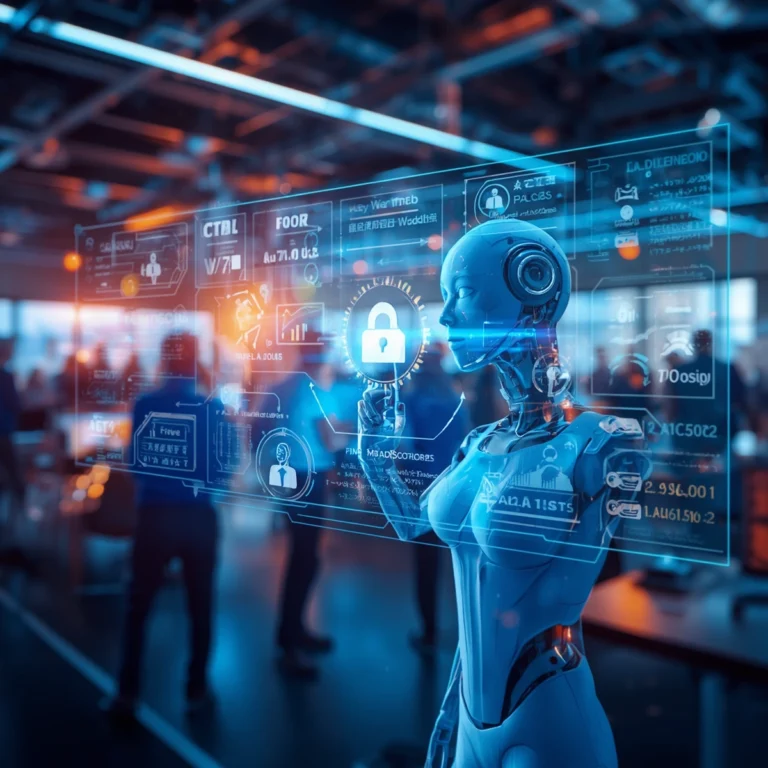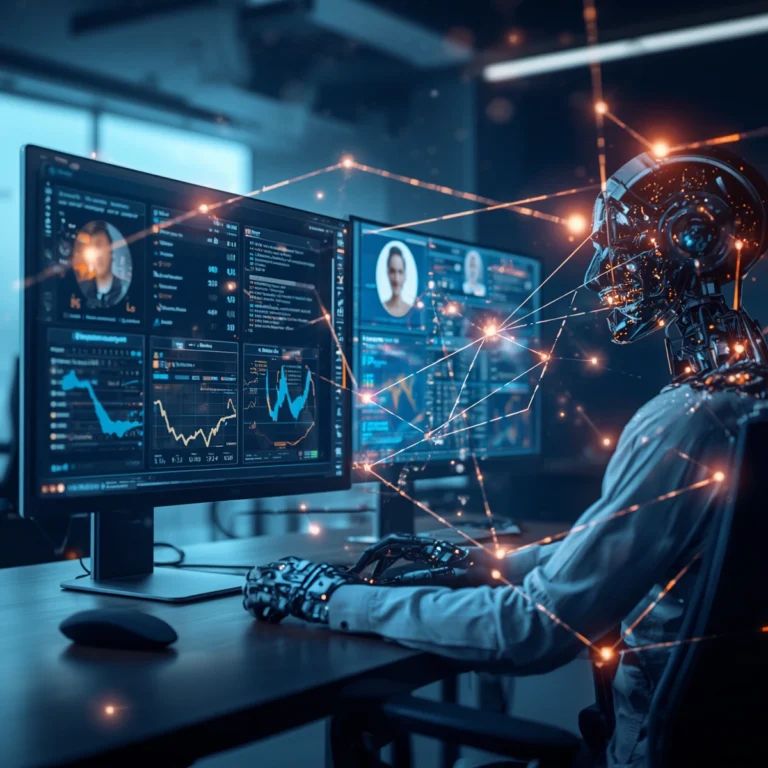

In the rapidly evolving world of technology, one of the most compelling developments over the last few years has been the emergence of agentic AI agents — artificial intelligence systems capable of acting autonomously, making decisions, optimizing workflows, and adapting intelligently to changes in real-time environments. These agents are empowered by advanced models in natural language processing, machine learning, and decision-making algorithms that allow them not only to complete tasks faster than traditional software but also to collaborate and evolve as if they were additional members of a team.
While the technical innovation behind agentic AI is fascinating, the true challenge lies elsewhere — in the human element. Specifically, how do you train your team to work effectively alongside these new digital colleagues? Teams are composed of historical experiences, instincts, emotional intelligence, and creativity. AI, even at its most advanced, operates according to data, logic, and optimization priorities. Integrating these two paradigms means creating a culture of collaboration that blends the best of both human and artificial minds.
This blog post will explore the key dimensions involved in training your team to work with agentic AI agents. At over 2000 words, we will provide not only insight but also practical direction for leadership, operations, HR, and all stakeholders keen to empower their people for this profound organizational transformation.
Understanding the Nature of Agentic AI
To train a team to collaborate with agentic AI agents, the first step is clarity. What exactly is an agentic AI? Unlike passive systems, which respond only to direct commands or automate linear workflows, agentic AI functions with a degree of independence. These systems can set goals, monitor their performance, interpret human feedback, and adjust approaches accordingly.
Agentic AI agents vary in capability and purpose. Some serve as virtual assistants equipped with vast contextual awareness and memory. Others operate in software engineering, generating and managing code bases with minimal supervision. In the marketing sphere, agentic systems can run campaigns, iterate creative content, A/B test variations, and adapt messaging based on real-time engagement. These agents are not bound to scripts — they learn from environments, strategize, and take initiative within defined parameters.
For your team to truly embrace this technology, they must understand that agentic AI is not just another complex tool; it’s a digital collaborator. This shift in perspective changes the dynamics of interaction. Instead of issuing commands and awaiting results, employees begin to discuss, iterate, and co-create with AI entities. The AI becomes a reasoning partner, not just automation. Preparing your team mentally and emotionally for this distinction is paramount.
Changing Organizational Mindsets
One of the biggest barriers to successful AI integration is mindset. People often view AI either as a threat or a crutch. The fear of automation displacing human labor is well-documented, but with agentic AI, the concern deepens because these systems appear to “think” and “decide”. On the other hand, some employees may become too dependent on AI, expecting it to carry all burdens without human creativity, ethics, or insight.
Leadership must proactively reframe the role of AI from enemy or savior to collaborator. This involves messaging and transparency from the top. Employees must understand that agentic AI agents are tools to augment their capabilities and to remove repetitive cognitive burdens — not to replace uniquely human strengths like empathy, intuition, judgment under ambiguity, and complex social negotiation.
To affect this mindset change, organizations must provide reassurances not only about job security but also about empowerment. Show employees clearly how AI can upgrade their roles rather than threaten their relevance. Display use cases where AI takes over bureaucratic, monotonous parts of a job, giving professionals back the time to do work that aligns with human passions and skills.
Integrating AI Literacy Across Every Role
Training people to work with agentic AI isn’t about creating a cohort of programmers. Rather, it’s about establishing a baseline AI literacy across the organization. Every employee, from operations to marketing to customer support, must gain enough understanding to converse with, collaborate with, and critically assess AI outputs.
AI literacy includes the ability to understand what agentic AI can do, where it fails, and how to interact with it effectively. Humans must learn that even intelligent systems can hallucinate data, apply biased logic, or interpret prompts creatively in ways that weren’t intended. Interacting with agentic AI demands active participation — people need to ask better questions, review AI decisions critically, and stay engaged.
This means developing in-house training programs or adopting external certifications that focus on human-AI collaboration skills. These should go beyond how to use certain platforms and teach frameworks for problem-solving with AI, understanding machine confidence levels, and applying ethical considerations to AI-generated decisions. Train your team to treat AI like a junior analyst with extraordinary potential but still in need of oversight, refinement, and sometimes redirection.
Redesigning Workflows Around Human-AI Synergy
To truly train your team to work with agentic AI, you must redesign workflows. Traditional workflows often assume either full manual execution or linear automation. With agentic AI capable of managing multi-step processes, surfacing insights, and making decisions based on fuzzy preferences, the design must change.
For instance, take the customer support workflow. In traditional systems, a ticket goes to a human who evaluates it, resolves the issue, or escalates it. With agentic AI agents, tickets might first be triaged by AI, solutions suggested, context pulled in from CRM systems, and the human agent consulted only for decisions needing emotional nuance or policy exceptions. The human’s new task becomes oversight, exception handling, and relationship building—not rote ticket processing.
Cross-functional design workshops should involve both process owners and AI developers to rethink how tasks flow. Incorporate loops for AI-human interaction, shared dashboards, and feedback mechanisms, and define clear points for escalation. Consider AI not as a replacement step but as a new node in the workflow network that increases optionality and speed.
This redesign is where the true productivity gains emerge and where training can enable each team member to find their most creative and influential role.
Soft Skills: The New Differentiator in the AI Age
When AI can write, analyze, design, optimize, and even plan projects, what remains distinctly human? The answer lies in soft skills. Empathy, communication, ethical judgment, mentorship, persuasion, and humor — these are qualities AI may simulate but not originate or experience.
Training teams to work with agentic AI includes elevating these human abilities. Leadership must prioritize and reward employees not simply for output, but for relational intelligence. This comes into sharper focus in hybrid work environments where AI sits in the digital workplace, and humans must interact fluidly with both their peer colleagues and their AI teammates.
Develop training sessions that focus on emotional intelligence, cultural sensitivity, strategic communication, and ethical decision-making. These traits, when applied to the oversight and interpretation of AI behavior, help prevent problems, surface opportunities, and maintain trust with customers and other stakeholders.
By deliberately making soft skills central to job advancement, your workforce becomes future-resilient. They no longer compete with AI but collaborate with it from a position of strength.
Building Feedback Loops Between Humans and AI
Agentic AI systems learn from feedback — not just data, but evaluative commentary about their performance. Similarly, humans improve their ability to prompt, interpret, and collaborate by having access to AI reflections. This mutual learning loop requires deliberate cultivation.
Training should include instructing team members on how to give feedback to AI systems: flagging hallucinated content, adjusting prompts to refine performance, and understanding how confidence scores relate to reliability. At the same time, teams should review AI log reports that can highlight repetitive behaviors, usage patterns, or areas where AI performance drops.
Some organizations go further and appoint “AI Champions” within each business unit—employees who develop advanced expertise in managing agentic AI and who serve as bridge figures to help others maximize value. These champions document best practices, experiment with new workflows, and help distill lessons for easier adoption at scale.
Well-orchestrated feedback loops result in smarter AI, more confident humans, and an organization that learns as a cohesive whole.
Cultivating Trust Between AI and Human Contributors
Trust is a two-way street, and within human-AI collaboration, it’s multidimensional. Humans need to trust that AI outputs are reliable, non-malicious, and transparent. At the same time, AI systems can be designed to “trust” specific human inputs more than others, based on track record or authority. This calibration must be facilitated by cultural and technical mechanisms.
You can train your team to build trust with agentic AI through transparency exercises. Make AI decision processes explainable. If the AI recommends a particular product design, allow the employee to see which data and assumptions led there. Likewise, train employees not to use AI passively, but to actively test its reasoning, ask why, request alternatives, and validate choices with their expertise.
High-trust environments also include room for error. Just as a new employee is allowed space to learn through iteration, so must AI systems be granted space to evolve. Encourage teams to treat small failures as learning episodes rather than threats. This psychological safety improves both morale and innovation.
Ethics and Governance: Guardrails for Human-AI Teams
With great power comes great responsibility — a lesson nowhere more relevant than in environments where agentic AI agents might take major actions affecting customers, finances, or reputations. Part of training your team to work with AI means deeply acquainting them with the ethical boundaries of delegated intelligence.
Every agentic agent must operate within governance frameworks: what it’s allowed to do, see, and recommend. And human colleagues must be trained to recognize when a decision should not be delegated to the AI, even if it seems technically feasible.
This requires scenario-based training sessions in which real dilemmas are explored. What happens when an AI recommends pricing based on behavior that might discriminate? What if the AI flags signals of mental health decline in customer datasets—what do you do with that knowledge? Training that explores gray areas fortifies your team’s ethical resilience.
Interdisciplinary ethics committees, including members from legal, HR, tech, and operations, can further support teams. They provide a resource for escalation, reflection, and appropriate AI boundary setting.
Measuring the ROI of Human-AI Team Training
Like any strategic investment, training your workforce to thrive alongside agentic AI must show results. However, ROI here takes a different shape than purely financial metrics. Success indicators include increased employee retention, faster project cycles, reduced cognitive burnout, smarter decisions, and higher net-promoter scores from clients and stakeholders.
Quantify improvements where you can — how many hours did agentic AI agents save your design team last quarter? How many customer complaints were routed in half the time due to co-piloting agents? But also conduct human engagement surveys. Are employees more excited about their work? Do they feel augmented rather than replaced by AI? These qualitative insights are just as important as hard numbers in gauging transformation maturity.
When communicating results, always tie them back to human uplift. The message should be that AI helped people win — not simply that the business squeezed more output.
A Co-Creation Future
Training your team to work alongside agentic AI agents isn’t a one-time event or a narrow technical upgrade. It’s a cultural, strategic, and deeply human journey of transformation. It demands patience, creativity, clarity, and above all — leadership.
Organizations that prepare their people for this co-creation future will enjoy massive benefits: resilience amid automation, enhanced innovation, and work environments that blend the best brains — carbon, and silicon-based — into something neither could achieve alone.
The organizations that will thrive tomorrow are not those with the most AI, but those where humans and agentic intelligence trust each other, learn from each other, and build a smarter, fairer, and more impactful world — together.
DigitalsGalaxy helps B2B companies build reliable lead generation systems using cold email, LinkedIn outreach, AI voice agents, SMS follow-up, and CRM automation. We focus on the full outreach system — from infrastructure and targeting to messaging, follow-up, reporting, and optimization. Our goal is to help businesses create more qualified conversations and turn outbound into a scalable growth channel.