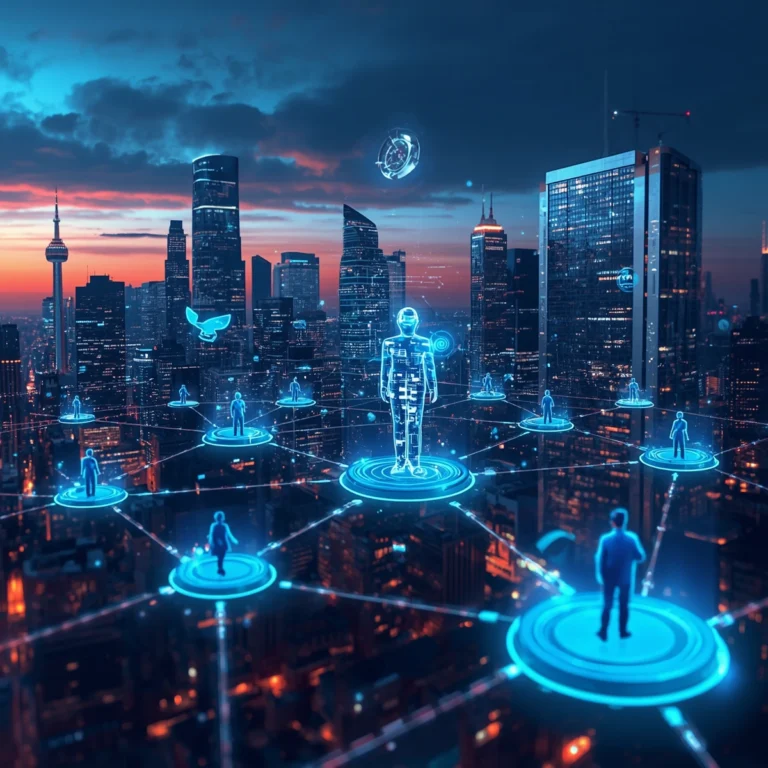

As the marketing world ventures deeper into the data-driven era, 2025 is shaping up to be a defining year for the architecture of marketing technology, commonly referred to as the MarTech stack. Modern marketing has evolved into a complex orchestration of data, platforms, content, personalization, analytics, and real-time decision-making. To achieve business goals at scale, marketing teams rely on an ever-evolving ecosystem of tools. But the next big wave isn’t just about tool proliferation; it’s about tool independence, intelligence, and real-time adaptability. At the forefront of this shift are autonomous AI agents, poised to become transformative drivers within the MarTech stack.
In this blog post, we dive deep into how autonomous agents are reshaping marketing workflows, strategy execution, and customer engagement in 2025. We explore how these intelligent entities are being embedded across the MarTech ecosystem, what’s enabling their rapid adoption, and what challenges brands must prepare for.
The MarTech Landscape in 2025: Complexity Meets Intelligence
The modern MarTech stack in 2025 is broader and more complex than ever before. No longer limited to email platforms or CRMs, today’s stack includes CDPs, AI engines, conversational interfaces, real-time data layers, analytics tools, personalization engines, workflow automation, and creative asset managers. And underneath all this sits cloud-based infrastructure driving data lakes, APIs, and AI model orchestration.
But there’s a growing concern among CMOs and marketing ops teams: the complexity of MarTech itself has become a bottleneck. More tools mean more integrations, more silos, and more specialized skills needed to operate effectively. Time-to-decision and time-to-action are affected, even if marketing teams hold the right insights.
To solve this, a new layer is emerging in the stack—autonomous agents. These agents are intelligent software programs that can plan, execute, and optimize marketing tasks and strategies with minimal human input. They are not just chatbots or automation scripts; they are goal-oriented actors, often equipped with reasoning engines, memory structures, and adaptive learning that allow them to navigate complex marketing environments.
What Are Autonomous Marketing Agents?
Autonomous agents are digital systems that operate with independence within defined parameters. In marketing, these agents can understand goals (e.g., increase MQLs, reduce CPA, or improve CX), access contextual data, make decisions, and interact with software applications or audiences to achieve outcomes.
Think of an autonomous agent as a marketing team member that can learn, self-correct, and complete specific workflows. Unlike traditional automation, which needs rigid triggers and rules, autonomous agents use a combination of AI capabilities—natural language processing, reinforcement learning, real-time data ingestion, and predictive analytics—to adaptively pursue objectives.
In the context of the 2025 MarTech stack, these agents are no longer optional productivity enhancers—they are strategy executors. They function as campaign managers, data analysts, content distributors, and customer success agents, all in parallel, continuously learning and optimizing across channels.
Autonomous Agents vs. Traditional Automation
Before we jump into their position in the 2025 MarTech stack, it’s critical to understand how autonomous agents differ from traditional automation tools. In earlier MarTech setups, automation tools followed simple “if-this-then-that” logic. A marketing automation platform might send an email after a download or trigger a campaign when a prospect reaches a lead score of 80.
Autonomous agents go many layers deeper. They can identify when a prospect’s behavior shifts, adapt messaging to behavioral context in real time, run A/B/n testing automatically, modify customer journeys continuously based on interaction data, and even prioritize accounts most likely to convert—all without needing explicit commands for every situation. They also collaborate seamlessly with other systems via APIs or workflow engines like Zapier or Workato, but with contextual awareness.
That’s a paradigm shift from repeatable processes to adaptive intelligence.
The Role of Autonomous Agents in the MarTech Stack
Transformative Integration
Autonomous agents are revolutionizing the MarTech stack by becoming the connective tissue and intelligent operators across various categories. Their integration is not just additive, but transformative, enabling marketing precision and efficiency.
Customer Data Layer
In the customer data layer, autonomous agents interact with CDPs and CRMs to analyze and segment audiences dynamically. They create dynamic audience definitions based on recent behaviors, lifecycle stage, or even mood inferred through communication.
Content Engines and DAMs
Within content engines and DAMs, agents automatically select or generate creative assets that match user intent to brand-appropriate marketing materials. For example, they can pull relevant case studies, format them into visually engaging assets, and send them to accounts via multiple channels.
Analytics and Reporting
In analytics and reporting, agents provide not only data but also insights and narratives behind it. They offer decision summaries, possible strategy alternatives, and predictive impact simulations, enabling marketing leaders to make informed decisions.
Campaign Execution Platforms
Autonomous agents design workflows, monitor outcomes, and iterate in real-time in campaign execution platforms. They can pause underperforming sequences, generate new email variations, or reallocate spend across paid channels based on resonating messaging or offers.
Direct Customer Communication
Perhaps most revolutionary is the role of agents in communicating directly with customers. These contextual digital personalities surface across channels via voice, text, or video, adapting tone, format, and intent based on the user. They can repurpose influencer videos or handle enterprise contract queries, providing personalized customer experiences.
Technologies Behind Autonomous Agents
The rise of autonomous agents is being driven by parallel advancements in AI and digital infrastructure. Large Language Models (LLMs) like GPT-4, Claude, and Gemini provide agents with deep contextual understanding, natural language capabilities, and memory frameworks. Reinforcement learning allows agents to iterate and improve based on feedback and interaction outcomes.
Another key enabler is the spread of vector databases and semantic search technologies that allow agents to find meaning, not just keywords, in vast data pools. Cloud-native microservices and GraphQL APIs allow these agents to securely interact with MarTech tools at scale.
In 2025, many enterprises are also adopting unified agent frameworks, where one cognitive layer connects multiple tools. Platforms such as Microsoft’s Copilot ecosystem or Google’s Vertex AI can host agents that access DAM systems, advertising platforms, and analytics APIs without separate codebases. This interoperability ensures agents can work seamlessly across channels, data sources, and platforms.
Revolutionizing Day-to-Day Marketing Operations
Campaign Ops Agent
Autonomous agents are transforming campaign management by structuring multi-channel campaigns, adapting messages for each touchpoint, and pre-testing creative assets. They can pause underperforming variants and optimize campaigns in real-time, ensuring maximum ROI.
SEO and Content Marketing
Intelligent agents are streamlining SEO and content marketing by researching topics, identifying gaps, generating outlines, and even writing initial drafts in brand voice. They can also update meta titles and internal links to optimize SEO authority and drive more traffic to priority content.
Account-Based Marketing (ABM)
In B2B marketing, autonomous agents act as mini-representatives for high-value accounts, analyzing digital behavior signals, monitoring LinkedIn activity, and customizing communication. They can use news and events to personalize outreach and build stronger relationships with target companies.
Sales Alignment
Marketing agents are syncing with CRM systems to continuously adjust lead scoring models, ensuring that sales teams receive high-quality leads. By analyzing sales win rates and injecting insights into lead scoring systems, agents can improve future routing logic and drive more conversions.
The Future of Marketing Operations
These use cases are not theoretical – high-performing brands are already integrating autonomous agents into their operations, treating them as team extensions rather than just vendor tools. As marketing continues to evolve, the role of autonomous agents will only continue to grow.
The Role of Human Marketers in an Agent-Driven Stack
A common concern is whether autonomous agents will replace human marketers, but the reality is more nuanced. In 2025, the marketer’s role is transforming, not disappearing. Tasks that were repetitive, operational, or time-consuming are being devolved to agents. This includes reporting, A/B variant testing, email deployment, budget pacing, and basic copy refinement.
However, marketers remain critical as strategic directors, brand stewards, and ethical guides. While agents might recommend re-targeting a broad new demographic based on engagement data, it’s human judgment that decides whether such a shift aligns with brand identity or long-term strategy. Humans also play a core role in storytelling, experience architecture, and empathy-driven initiatives that go beyond optimization.
In essence, agents operate the machinery; humans command the mission.
Moreover, a new role has emerged in marketing teams by 2025: Agent Architects. These are professionals tasked with training, configuring, and overseeing autonomous agents. Much like campaign managers of the past were responsible for orchestrating emails and creatives, agent architects ensure that an ecosystem of agents performs in harmony, aligns with business goals, and remains ethical and secure.
Challenges and Governance Needs
Despite all their capabilities, autonomous agents in MarTech bring a host of challenges that require active governance. First is the issue of bias in generative content. AI agents may unintentionally reinforce stereotypes or generate exclusionary messaging if not carefully supervised. This makes inclusive design and bias testing critical to brand safety.
Bias in Generative Content
Autonomous agents in MarTech can unintentionally reinforce stereotypes or generate exclusionary messaging if not carefully supervised. Inclusive design and bias testing are critical to brand safety, ensuring that AI-generated content is respectful and fair. Brands must prioritize these considerations to avoid harming their reputation and alienating customers.
Data Over-Dependence
Agents that learn from noisy, unvalidated, or skewed datasets can propagate harmful strategies or misinterpret user behavior. Human checkpoints are essential in strategy cycles to ensure that agents are making informed decisions. By validating data quality and agent outputs, brands can mitigate the risks associated with data-driven decision-making.
Regulatory Compliance
Regulatory frameworks like the EU’s AI Act impose limits on autonomous decision-making, particularly around personalization and data usage transparency. Brands must ensure that marketing agents comply with opt-in requirements, offer explainability, and provide consumers with control over AI-driven communications. By prioritizing transparency and compliance, brands can build trust with their customers and avoid regulatory penalties.
Cultural Adaptation
The integration of autonomous agents requires a cultural shift, where teams learn to work with intelligent machines proposing daily strategies. Organizations must build a culture of co-creation, where team members trust and verify agent recommendations but also feel empowered to challenge or override them when necessary. By fostering this collaborative environment, brands can unlock the full potential of autonomous agents and drive business success.
The Future of Autonomous Agents in MarTech
As we venture beyond 2025, the evolution of autonomous agents will likely be marked by deeper hyper-personalization, cross-channel identity mapping, and the growing trend of agent-to-agent communication.
Deeper Hyper-Personalization and Cross-Channel Identity Mapping
As autonomous agents continue to evolve, we can expect to see deeper hyper-personalization and cross-channel identity mapping. This will enable brands to deliver highly targeted and relevant experiences to their customers, driving engagement and loyalty. By leveraging advanced data analytics and machine learning, agents will be able to anticipate customer needs and preferences.
Agent-to-Agent Communication
The future of MarTech will also see the growth of agent-to-agent communication, where brands deploy agents that can “negotiate” partnership terms with agents of influencers, affiliates, or vendors. This will enable more efficient and effective collaborations, streamlining business processes and driving revenue growth. Customer-facing agents will also engage directly with assistants like Siri or Alexa to answer questions or facilitate transactions.
Agent Marketplaces
A potential frontier in MarTech is the emergence of agent marketplaces, where marketers can shop for pre-trained agents focused on specific use cases. These agents could be drag-and-drop compatible with enterprise stacks, turning marketing into a true plug-and-play discipline. This will enable marketers to easily find and deploy agents that meet their specific needs, driving innovation and efficiency.
A New Paradigm in Marketing
The rise of autonomous agents is not just another trend in MarTech – it’s the foundation of a paradigm shift. Marketing will become more responsive, contextual, collaborative, and intelligent, enabling brands to deliver highly personalized and effective experiences to their customers. By leveraging the power of autonomous agents, marketers will be able to drive business growth, improve customer satisfaction, and stay ahead of the competition.
Conclusion: The MarTech Stack’s Intelligent Future
As we look at the MarTech stack of 2025, it’s clear that the proliferation of tools is giving way to a new age of orchestration, powered by autonomous agents. These digital strategists not only simplify workflows but also enhance customer experiences, elevate decision-making, and enable scale like never before.
The organizations that win in this new era won’t be the ones with the most tools—they’ll be the ones that have the smartest agents working in tandem with their most creative people. By embedding autonomous intelligence into the heart of marketing operations, brands can turn complexity into clarity, speed into strategy, and data into truly human-centered growth.
DigitalsGalaxy helps B2B companies build reliable lead generation systems using cold email, LinkedIn outreach, AI voice agents, SMS follow-up, and CRM automation. We focus on the full outreach system — from infrastructure and targeting to messaging, follow-up, reporting, and optimization. Our goal is to help businesses create more qualified conversations and turn outbound into a scalable growth channel.